

Choosing a job tracker is less about finding more features and more about finding something you can rely on throughout a long job search. Tools like Huntr and Careerflow both promise to help job seekers stay organized, manage applications, and use AI-powered support across resumes and cover letters. The challenge is understanding how those tools behave once your job search process becomes more demanding. This comparison breaks down Huntr vs. Careerflow based on real usage, with a focus on what actually helps job tracking hold up across the entire job search.
Quick Verdict
If you are choosing between Huntr vs. Careerflow and want a short answer, Huntr is the safer default for most job seekers. It works reliably as a job tracker and job application tracker, stays organized as your job search grows, and covers more of the entire job search without forcing you to constantly double-check outputs. For people running a long job hunt across multiple job boards, Huntr feels steady and predictable.
Careerflow can make sense for a narrower group of job seekers. If your job search needs are heavily centered on LinkedIn, and you value speed and automation over manual review, Careerflow can be useful. It focuses more on AI-powered tools that try to move fast, especially around resumes and LinkedIn activity. The tradeoff is that you may spend more time reviewing changes and correcting details as your job search journey gets more complex.
If you are on the fence, the simplest tiebreaker is trust. Ask yourself how often you are willing to double-check your job search tools. If you want something that stays organized, handles job tracking cleanly, and supports the entire job search with fewer surprises, Huntr is usually the better fit. If you are comfortable trading some reliability for automation speed, Careerflow may still be an option.
How We Compared Huntr and Careerflow
Job tracking alone no longer covers what job seekers actually need. The job search process now includes saving roles from multiple job boards, managing follow-ups, tailoring resumes and cover letters, and keeping track of application progress across weeks or months. A tool that only tracks job applications without supporting the rest of the application process quickly becomes limiting.
Our comparison of Huntr vs. Careerflow focused on how each tool supports a real job search journey from start to finish. We looked at capture and organization first, because saving jobs with clean job details sets the foundation. We evaluated workflow at scale, including how well each tool handles follow-up reminders and tracks application statuses once the volume increases. We spent significant time on resumes and AI reliability, since AI resume builders and resume optimization tools can either save time or introduce risk. LinkedIn support was considered only where relevant, since not every job seeker relies on LinkedIn equally. Finally, we examined insights and follow-through, meaning whether the tool helps you understand job search progress and adjust over time.
This perspective is informed by hands-on testing across more than 40 resume and job search tools. That broader context matters because it makes tradeoffs easier to spot. Patterns that feel minor in isolation become clearer when you have seen how different tools behave across the job market.
The Core Difference Between Huntr and Careerflow: Reliability vs Automation
At a high level, both Huntr and Careerflow help job seekers track job applications and manage their job search. Both offer AI-powered tools across resumes, cover letters, and job tracking. On paper, they appear similar.
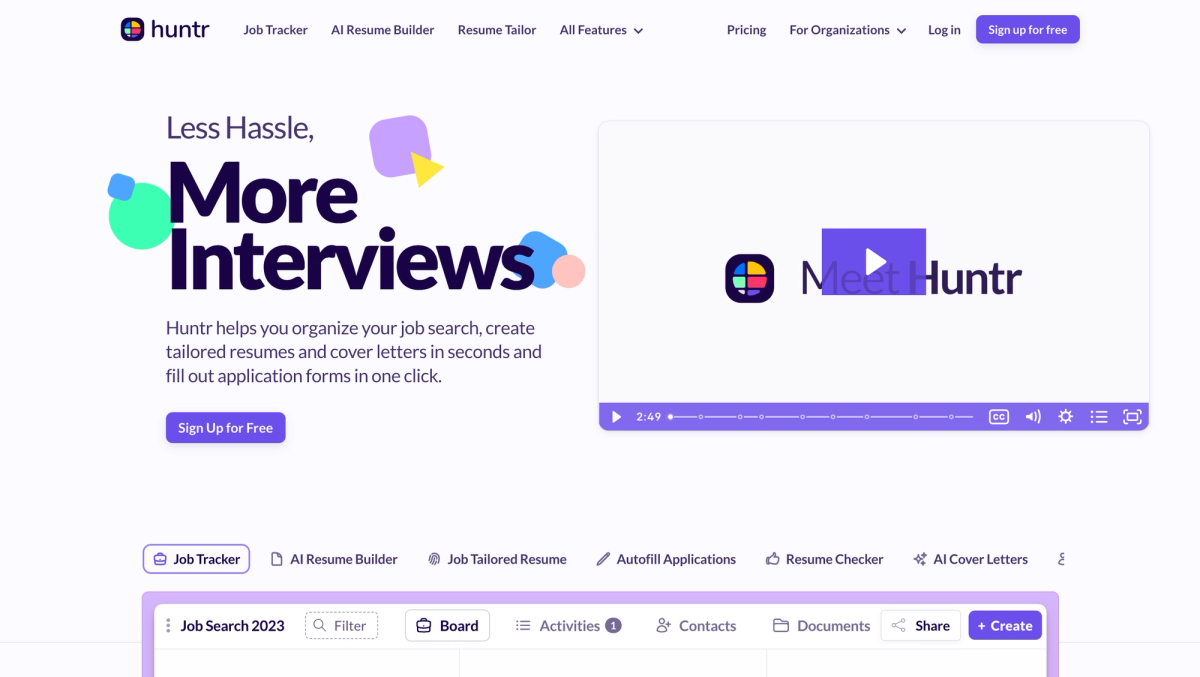
The difference shows up in what each tool is built to prioritize. Huntr emphasizes accuracy, review, and control across the entire job search process. It encourages you to see what is happening, make changes deliberately, and keep your information consistent as you apply to more roles.
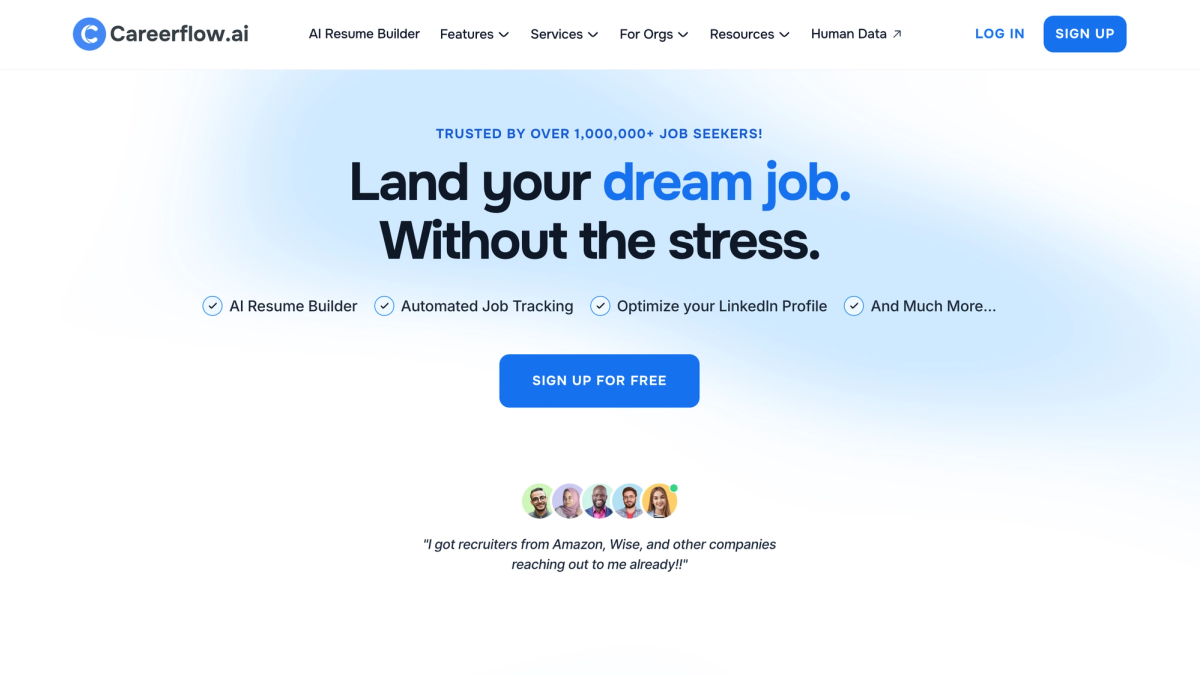
Careerflow leans more heavily into speed and automation. Its tools aim to move quickly, especially around resumes and LinkedIn-related features. That approach can save time early on, but it relies more on AI outputs being correct without as much manual oversight.
As application volume increases, these priorities matter. A reliability-first approach tends to scale more safely because errors are easier to catch before they compound. An automation-first approach can still be effective, but it often requires more double-checking as the job search becomes more complex. This difference explains most of the tradeoffs discussed in the sections that follow.
Job Tracking Workflow (From Finding a Job to Following Up)
In day-to-day use, the job tracking workflow is where the differences between Huntr vs. Careerflow become more obvious. Both tools allow you to save jobs from job boards and manage job applications, often through a Chrome extension. The key question is how quickly you can go from finding a job posting to having a clean, usable entry in your job tracker.
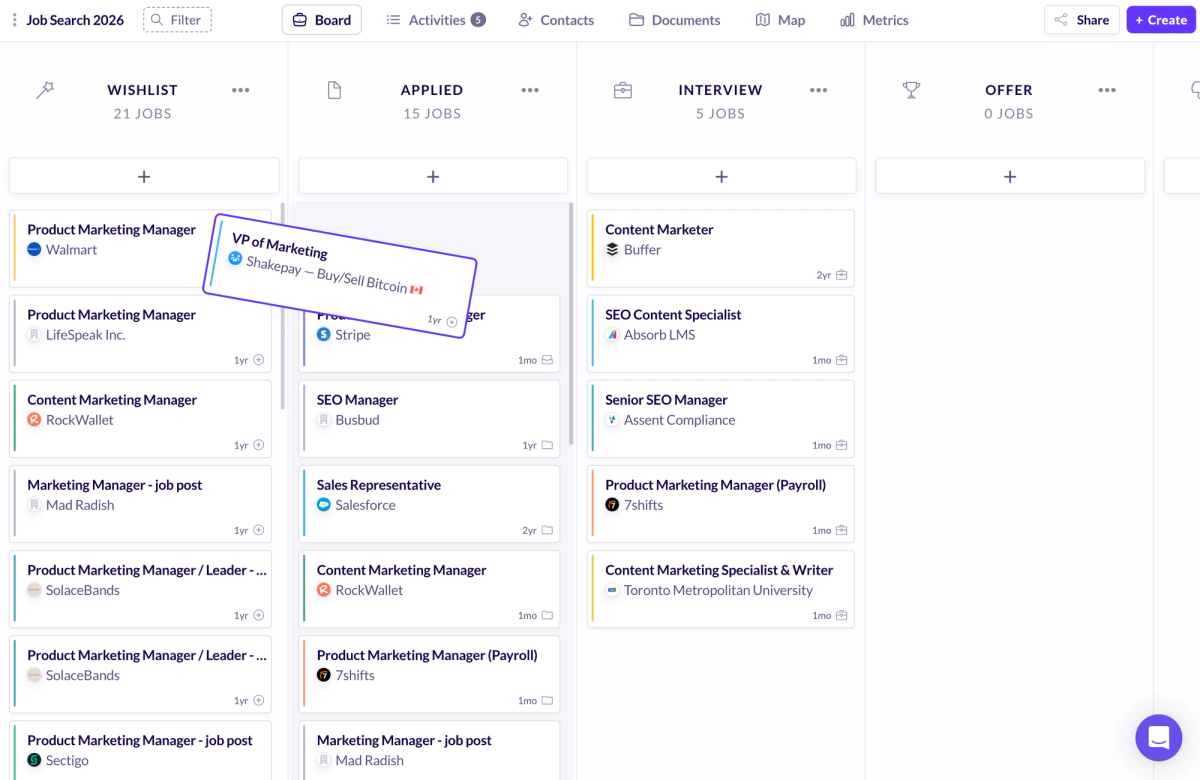
Huntr generally moves smoothly from job found to job tracked. Saving jobs tends to preserve important job details like job title, job description, and company information. As you save more roles, the data stays organized in a way that makes it easy to scan and update. This matters once you are dealing with dozens of job listings across multiple job boards.
Careerflow also supports saving jobs and tracking job applications, but friction tends to appear over time. As you accumulate more entries, cleanup becomes more common, especially around duplicated fields or incomplete job details. This does not always show up on day one, but it becomes noticeable when tracking 50 to 200 job applications.
Follow-ups are another area where consistency matters. Huntr handles follow-up reminders and interview notes in a straightforward way that scales with volume. Careerflow supports similar features, but users may need to spend more time maintaining clarity as the job search process stretches on. Overall, Huntr behaves like a job application tracker that works as expected, while Careerflow benefits from more careful oversight as complexity grows.
Resume Tools and AI
Drafting vs Tailoring
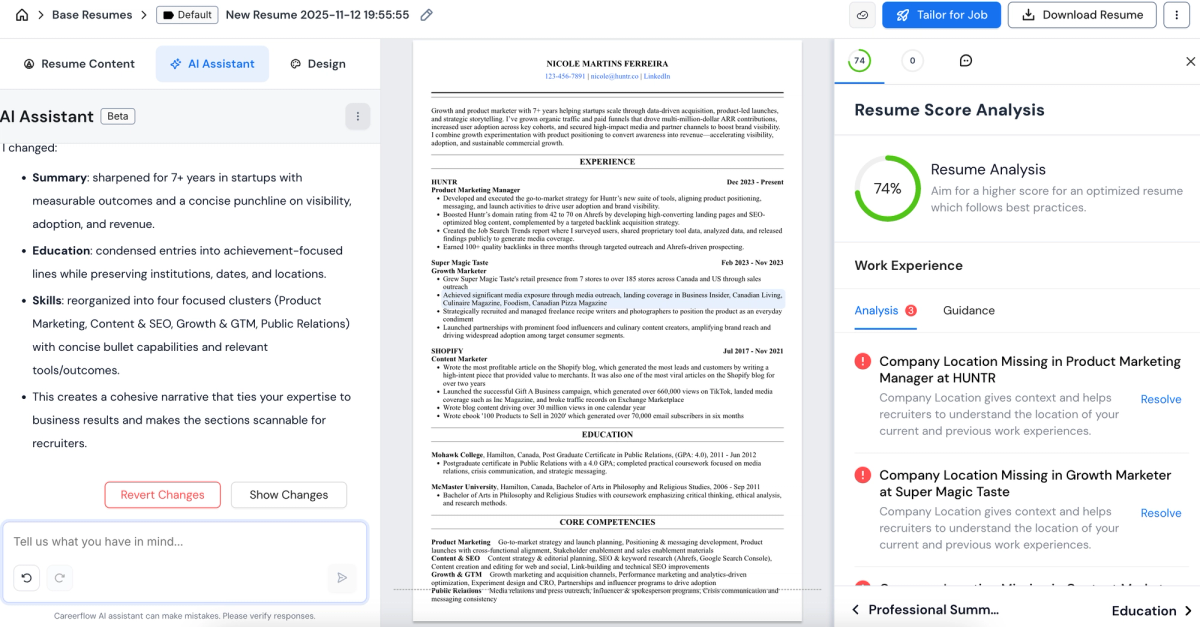
Resume tools and AI are often the deciding factor when choosing between Huntr vs. Careerflow. Both platforms function as AI resume builders, but they differ in how controlled the experience feels.
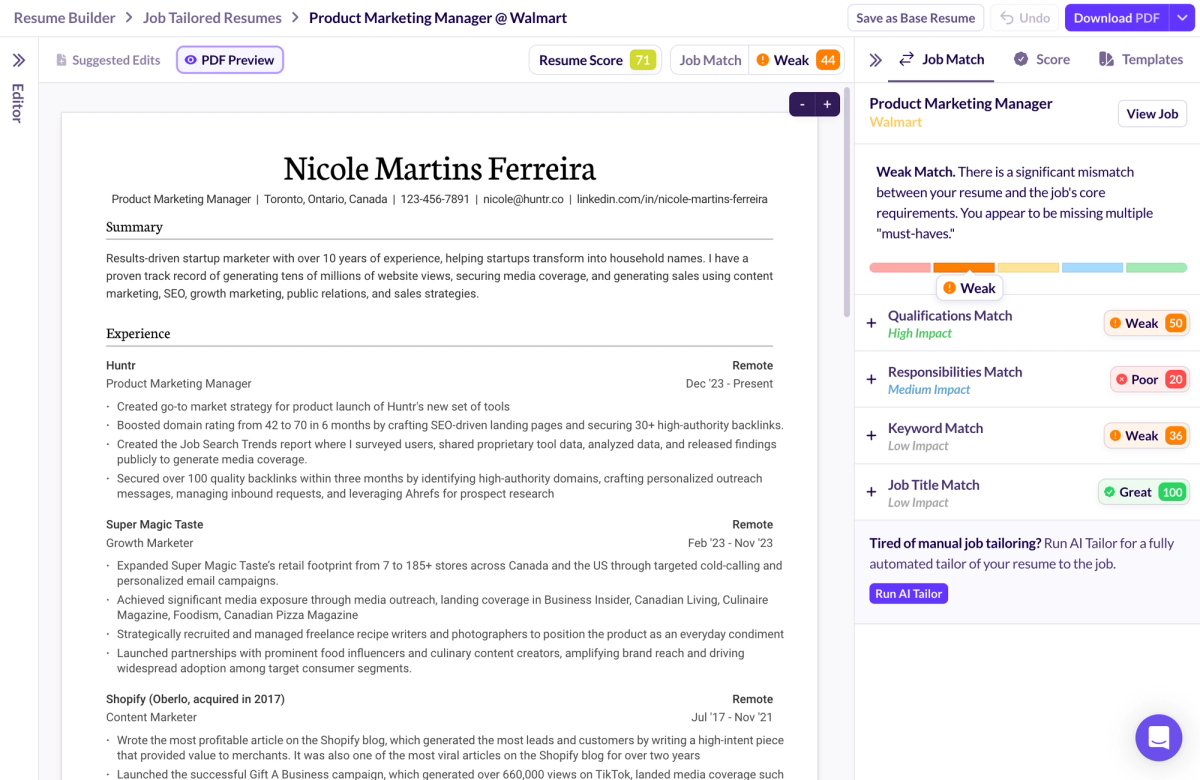
Huntr makes it easy to start from an existing resume or build a base resume quickly. Resume building feels guided rather than rushed. When tailoring resumes to a specific job description, the emphasis stays on accuracy and relevance. You can review bullet point suggestions, adjust relevant keywords, and make sure the resume aligns with applicant tracking systems before changes are finalized.
Careerflow also supports resume building and tailored resumes, but it leans more into speed. Job-specific tailoring can happen quickly, though the level of control over individual edits is lower. For some job seekers, that tradeoff is acceptable. For others, especially those applying to roles with strict requirements, the reduced review step can feel risky.
AI Reliability (Risk vs Reward)
AI-powered tools can genuinely save time when they are used carefully. Both Huntr and Careerflow offer AI tools for resume optimization, bullet point suggestions, and cover letter generation. The difference lies in how reliably those tools behave.
Huntr tends to keep AI assistance within clearer boundaries. Suggestions are easier to review and adjust before they affect resumes and cover letters. This helps reduce issues like inflated match confidence or misaligned keywords that might confuse applicant tracking systems or hiring managers.
Careerflow’s automation can move faster, but that speed increases the chance of subtle problems. Misattributed achievements, fabricated details, or edits applied without a clear approval step can slip in. None of these issues is guaranteed, but they become more likely as reliance on automation increases. In practice, prioritizing trust and accuracy over aggressive automation leads to fewer downstream corrections.
LinkedIn Support (Only If It’s Part of Your Strategy)
LinkedIn support matters for some job seekers and is secondary for others. In the comparison of Huntr vs. Careerflow, this is one of the clearer areas where Careerflow focuses more attention.
Careerflow offers more tools centered on the LinkedIn profile, including guidance aimed at improving professional presence and visibility to potential employers. For job seekers whose search is tightly connected to LinkedIn activity, this can be helpful.
Huntr takes a lighter approach to LinkedIn support. It focuses more on job tracking, resumes, and cover letters rather than deep LinkedIn optimization. For many job seekers, this is enough, especially when applications come from multiple job boards or direct company sites.
The key point is that LinkedIn optimization is situational. It can influence outcomes in certain job markets and roles, but it is not essential for every job search journey.
Pricing, Free Plans, and What You Actually Get
Pricing often looks similar at a glance, but the details matter. Both Huntr and Careerflow offer a free plan, which is important for job seekers who want to test a job tracker before committing.
Huntr’s free tier allows meaningful use of its job application tracker and core resume tools. You can stay organized, track application statuses, and get a real sense of whether the platform supports your entire job search. Paid upgrades mainly expand limits and add convenience rather than unlocking basic functionality.
Careerflow also offers a free plan, but access to some features feels more constrained. Paid tiers focus on unlocking additional automation and AI-powered tools. As with many job search tools, the value of upgrading depends on whether those features actually reduce effort in your application process.
When evaluating pricing, we pay close attention to download access, renewal clarity, cancellation friction, and how clearly free versus trial features are explained. Transparent pricing matters because job seekers already have enough uncertainty during a job hunt.
Improving Results Over Time (What Actually Moves the Needle)
A job tracker should do more than store job applications. It should help you improve results over time. This is where insights and accountability come into play.
Huntr makes it easier to see job search progress at a glance. Tracking application statuses, follow-ups, and interview notes helps surface where things stall. Over time, patterns emerge that show whether the issue lies in targeting, resumes, or timing.
Careerflow can also surface insights, but the signal is sometimes harder to interpret as volume grows. When automation handles more steps, it can be less obvious where breakdowns occur. Job seekers may need to do more manual review to understand what repeated rejections are actually indicating about the job market or skill gaps.
A simple weekly review habit matters more than advanced analytics. Looking at follow-ups, recent applications, and changes to resumes and cover letters often prevents wasted effort, regardless of which tool you use.
Which One Should You Choose?
For the visual organizer who wants clarity and momentum, Huntr fits naturally. Its job tracker keeps information clean and makes it easier to stay organized across a long job search process.
High-volume appliers who submit many job applications benefit from Huntr’s stability as a job application tracker. Speed matters, but avoiding chaos matters more once volume increases.
LinkedIn-first networkers may find more value in Careerflow, especially if profile visibility is central to their job search tools. This is one of the narrower cases where Careerflow’s focus aligns well.
Career changers often need careful gap-spotting and controlled tailoring. Huntr’s approach to tailored resumes and resume review tends to support this better, especially when roles differ significantly from past experience.
Mid- and senior-level candidates usually benefit from positioning over keyword stuffing. Tools that support thoughtful resumes and cover letters with fewer automated surprises tend to work better here. In most cases, Huntr fits these needs more consistently.
Conclusion
In the end, Huntr vs. Careerflow comes down to whether you want a job tracker that stays reliable as your job search gets longer and more complex, or whether you are comfortable trading some control for faster automation. Careerflow can be workable for LinkedIn-first job seekers who are willing to review and correct AI outputs, but most people will get more consistent results from Huntr as an all-in-one platform for job tracking, resume optimization, cover letters, and follow-ups. If you want a job application tracker that helps you stay organized without adding extra cleanup, sign up for Huntr today for free and see if it fits your workflow.
FAQs
Is Huntr or Careerflow better for beginners?
Huntr is usually easier for beginners because it behaves predictably as a job tracker and resume builder. It requires less interpretation of AI outputs.
Which one is better if I apply mostly on LinkedIn?
Careerflow can make sense if LinkedIn is the primary source of job opportunities and profile optimization is a priority.
Do I really need AI resume tailoring tools?
AI resume builders can help, but only when outputs are reviewed. They should support your decisions, not replace them.
Are match scores accurate enough to trust?
Match scores can provide direction, but they should not be treated as final judgments. Applicant tracking systems and hiring managers evaluate context that scores cannot fully capture.
Can I use Huntr or Careerflow alongside Teal or Jobscan?
Yes. Many job seekers combine tools, using one as a job tracker and others for specific checks or insights. However, Huntr can do the job of all three and better.
Which tool is better for tracking networking and referrals?
Huntr’s tracking features tend to be clearer for managing contacts, notes, and follow-ups over time.
What’s the best option if I’m on a tight budget?
Huntr’s free plan offers broader coverage for the entire job search, making it easier to stay organized without upgrading immediately.

Ashliana Spence
Ashliana is a freelance marketing and growth operations consultant who works with lean teams to improve where and how they show up, communicate, and operate. With a background in integrated marketing communications, she focuses on messaging, content, systems, and processes, turning complex ideas and values into clear narratives and building workflows that help teams move with consistency and intent to support long-term trust-driven growth.
Get More Interviews, Faster
Huntr streamlines your job search. Instantly craft tailored resumes and cover letters, fill out application forms with a single click, effortlessly keep your job hunt organized, and much more...
AI Resume Builder
Beautiful, perfectly job-tailored resumes designed to make you stand out, built 10x faster with the power of AI.
Next-Generation Job Tailored Resumes
Huntr provides the most advanced job <> resume matching system in the world. Helping you match not only keywords, but responsibilities and qualifications from a job, into your resume.
Job Keyword Extractor + Resume AI Integration
Huntr extracts keywords from job descriptions and helps you integrate them into your resume using the power of AI.
Application Autofill
Save hours of mindless form filling. Use our chrome extension to fill application forms with a single click.
Job Tracker
Move beyond basic, bare-bones job trackers. Elevate your search with Huntr's all-in-one, feature-rich management platform.
AI Cover Letters
Perfectly tailored cover letters, in seconds! Our cover letter generator blends your unique background with the job's specific requirements, resulting in unique, standout cover letters.
Resume Checker
Huntr checks your resume for spelling, length, impactful use of metrics, repetition and more, ensuring your resume gets noticed by employers.
Gorgeous Resume Templates
Stand out with one of 7 designer-grade templates. Whether you're a creative spirit or a corporate professional, our range of templates caters to every career aspiration.
Personal Job Search CRM
The ultimate companion for managing your professional job-search contacts and organizing your job search outreach.
Huntr
Blog Product Updates Resume Skill Guides Resume Examples Interview Question Guides Research 2025 Job Search Trends Report Affiliate Program Careers Privacy policy Terms of service Write for us LinkedIn Reddit r/HuntrCo Twitter @TryHuntr Email UsProduct
Job Tracker AI Resume Builder Resume Tailor Resume Checker AI Cover Letters Resume Summary Generator Resume Bullet Generator Resume Skills Generator Resume Headline Generator Resume Keyword Scanner Job Keyword Finder Targeted Resume Contact Tracker Interview Tracker Job Search Metrics Job Application Autofill Resume Storage AI Resume Review Job Clipper Resume Optimization ChatGPT Resume Builder Resume Fixer LinkedIn Resume Builder AI Resume Rewriter Interview Question Generator