
Huntr Blog
Huntr vs Wobo: Which AI Job Search Tool Is Better in 2026?
February 18, 2026

Choosing the right AI job search tool matters more than ever as the job market becomes faster, noisier, and more automated. Job seekers comparing Huntr vs. Wobo are usually trying to answer a practical question: should technology help me apply better or simply apply more? Both tools sit in the AI job search space, but they take very different approaches to job hunting, automation, and control. This comparison breaks down how each platform actually works in practice so you can decide which one fits your workflow, priorities, and expectations from modern AI-powered job search tools.
Quick Overview
When comparing Huntr vs. Wobo, the difference comes down to how much control you want during the job application process. Huntr focuses on helping job seekers move faster without losing visibility or accuracy, while Wobo prioritizes automating applications at scale with minimal upfront involvement.
If you want to save time but still review what gets sent, Huntr is the safer choice. If you want applications going out with little hands-on effort and are willing to review results later, Wobo may feel more appealing. The practical distinction is guided autofill with review versus full auto apply.
This tradeoff matters more than it sounds. Resume quality, relevance to job descriptions, tracking progress, and follow-up discipline all influence interview chances. Tools that optimize only for speed can increase application volume but also raise the risk of misalignment, weaker response rates, and missed context. In practice, “better” means different things depending on whether you value control, accuracy, and follow-through or convenience and delegation during your AI job search.
What Is Huntr and How Does It Work?
Huntr’s Core Philosophy
Huntr is built like a job search CRM rather than an auto-apply tool. The experience centers on staying organized, reviewing what goes out, and repeating a clean process across many applications. Instead of removing the job seeker from the loop, Huntr reduces friction in the parts of the process that tend to waste time.
Day to day, this feels less like automating applications and more like managing a structured pipeline. You spend less time copying information between job boards and forms and more time making sure each application is aligned with the role you are targeting.
Key Features That Define Huntr
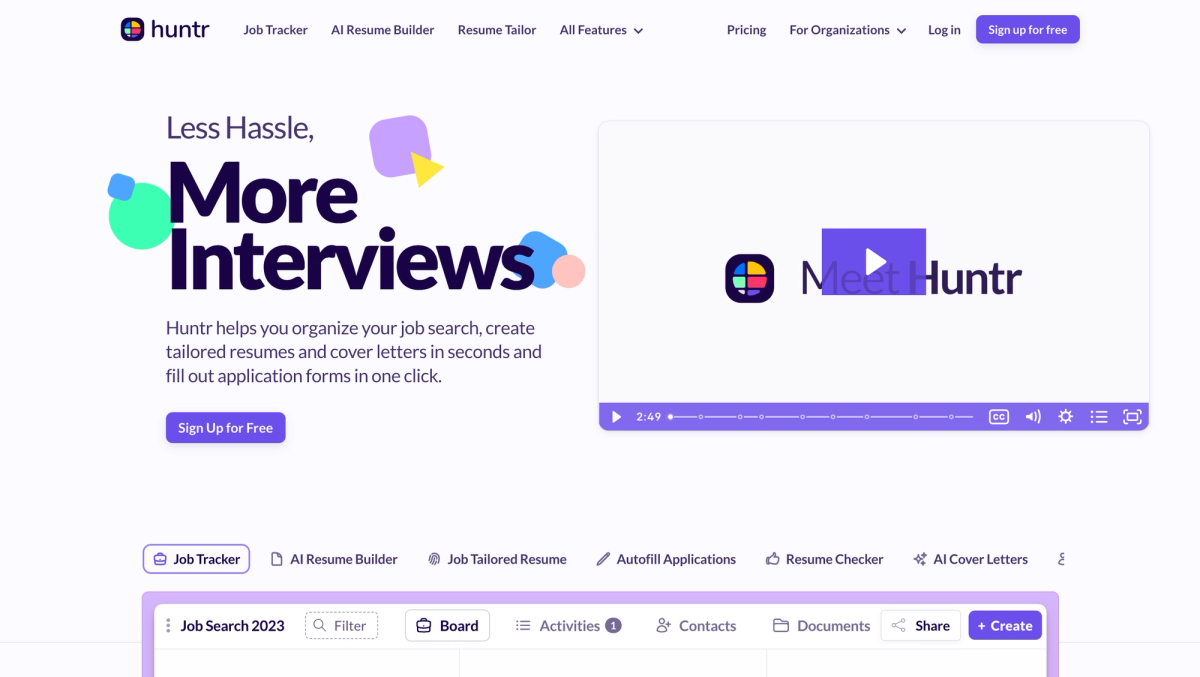
Huntr combines job tracking, resume building, and autofill into a single workflow. Each role can be saved with its job description, notes, contacts, and documents, which makes it easier to manage multiple applications without losing context. The resume builder supports multiple versions tied to specific roles, which helps when tailoring for different job descriptions.
Guided autofill speeds up repetitive fields in job applications while still letting you review before submitting. Huntr also supports imports from LinkedIn, PDF, and DOCX files, along with exports to PDF and DOCX. That flexibility matters when applying across different companies and applicant tracking systems.
Template options are limited compared to design-first tools, but they are modern and offer deeper layout and formatting control than many resume builders. A Chrome extension makes it easier to save job listings and postings directly into your tracker, keeping everything in one web app.
What Makes Huntr’s Resume Support Stand Out
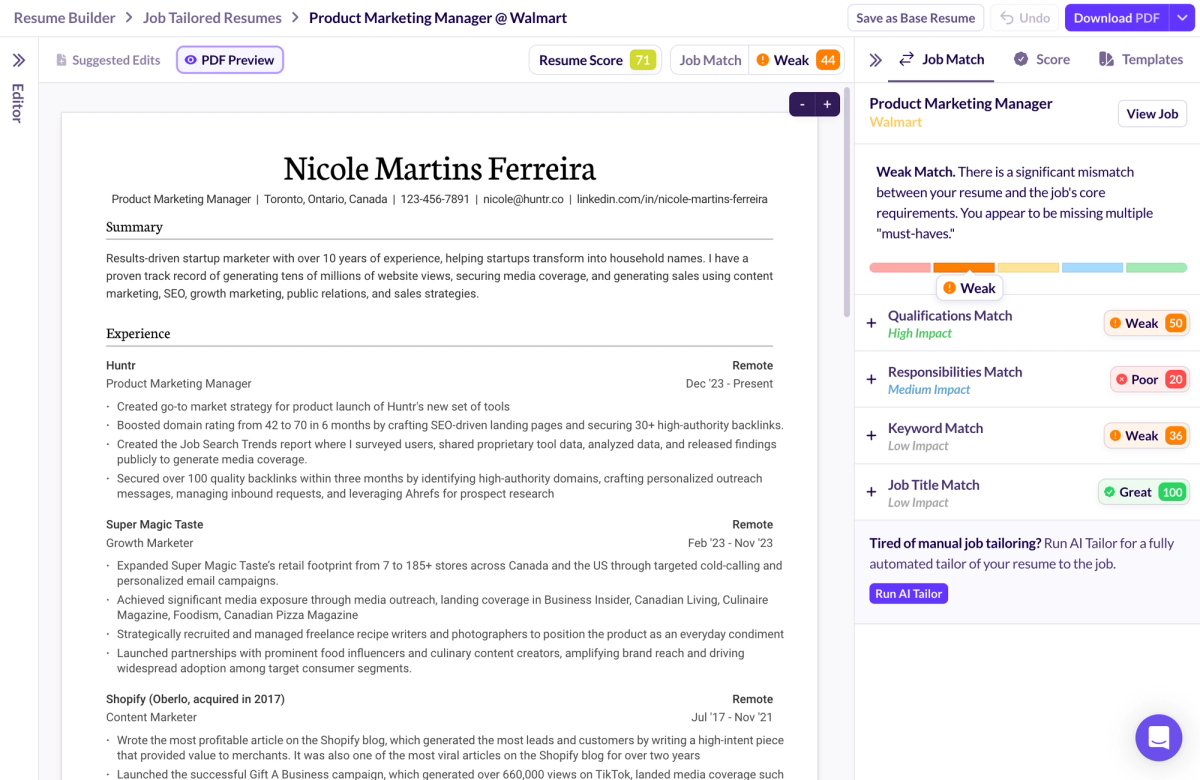
Huntr’s resume support focuses on alignment rather than surface-level optimization. Instead of only suggesting keywords, it evaluates how well your experience maps to a specific job description. This includes a clear distinction between overall resume quality and fit for a particular role.
In our testing, Huntr’s job match scoring separates overall resume quality from job-specific fit, and it checks qualifications and responsibilities alongside keywords rather than treating matching as keyword overlap. This makes it easier to see where a resume is strong and where it needs adjustment before applying.
Huntr also blends AI support with human review. AI helps with drafting, rewrites, and tailored cover letters, while human feedback adds a layer of judgment that reduces generic phrasing and unrealistic claims. For job seekers who care about accuracy, this combination tends to produce stronger resumes and cover letters.
Who Huntr Is Best Suited For
Huntr works best for job seekers who care about relevance, consistency, and interview outcomes. It fits well with networking-heavy searches, referral-driven applications, and roles where small differences in positioning matter.
It is also a strong option for people applying to many jobs who want fewer mistakes rather than more submissions. If you want to understand what you sent, where you applied, and how to follow up, Huntr supports that mindset well.
What Is Wobo and How Does It Work?
Wobo’s Core Philosophy
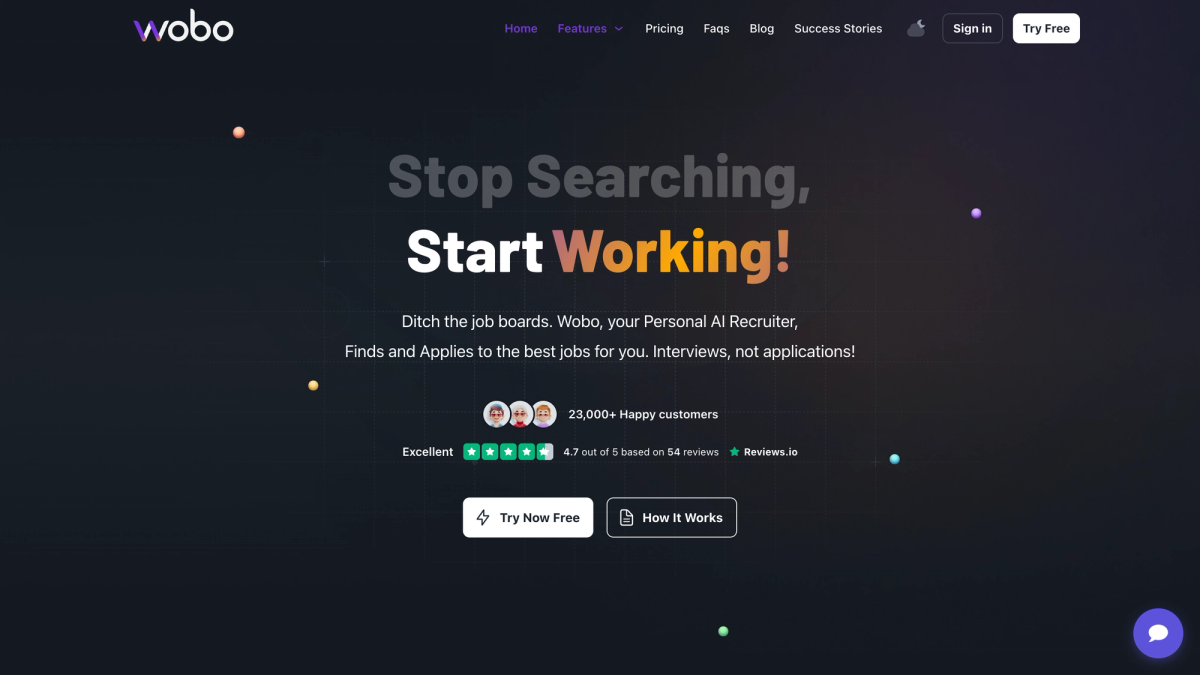
Wobo is designed around a set it and forget it approach. The platform positions itself as a personal AI recruiter that handles much of the job search on your behalf. Persona-based matching is used to automate decisions about which roles to pursue and how to apply.
For users who feel stuck, overwhelmed, or short on time, this promise of automation can be appealing. The tradeoff is that involvement shifts from reviewing before submission to checking results afterward.
Key Features That Define Wobo
Wobo emphasizes automated job discovery across job boards and job openings. Its core differentiator is auto-apply workflows that submit job applications without requiring manual review for each one.
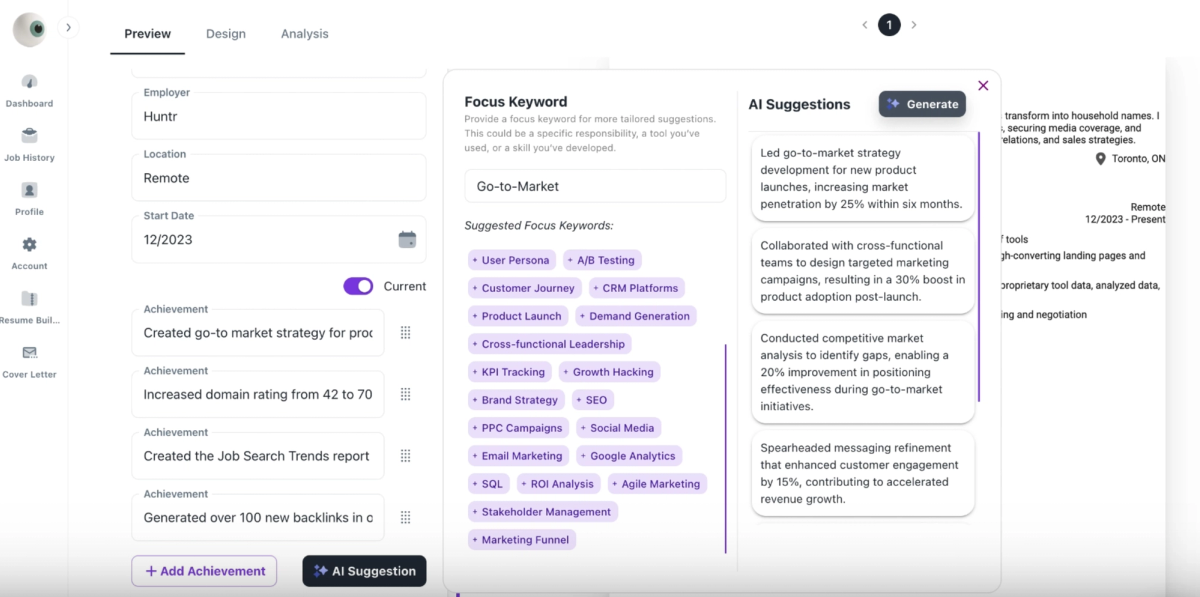
On the resume side, Wobo offers AI-assisted optimization and rewrites rather than a full bullet generator that builds role-specific bullets from scratch. Wobo can suggest bullet rewrites and example bullets based on focus keywords, but those outputs often need editing to reflect real scope and metrics. It also offers cover letter assistance, but quality can vary, so it is worth reviewing and editing before using anything in an application.
What to Expect From Wobo’s Resume Builder
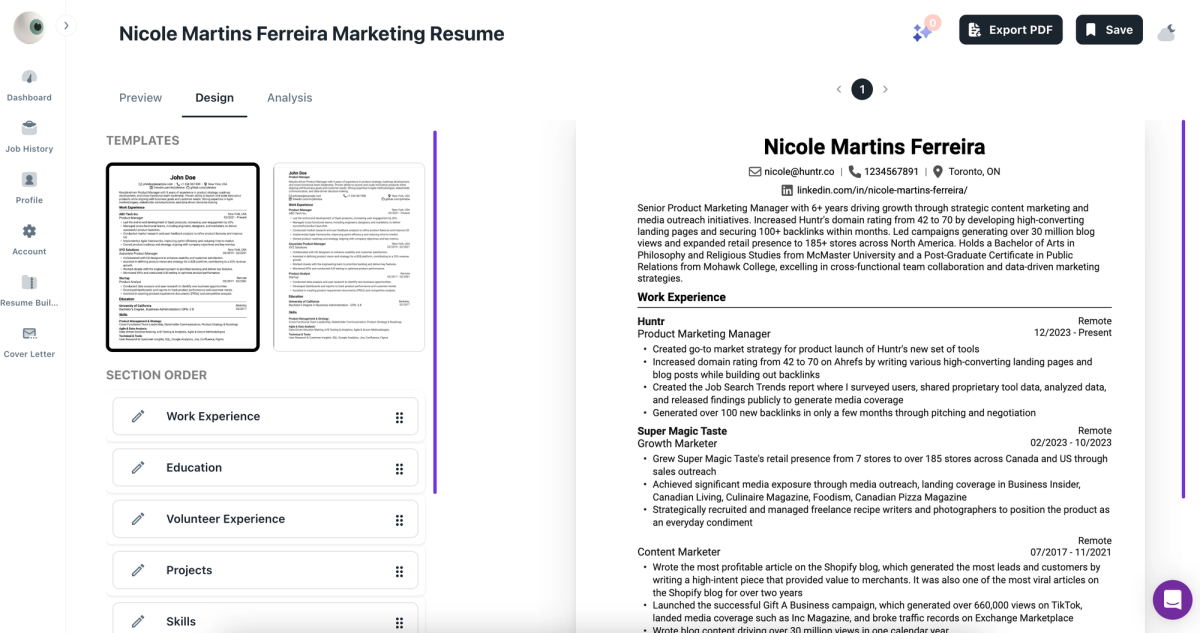
Wobo’s resume builder covers a wide range of features but with limited depth. Optimization is primarily keyword-forward, with a strong focus on applicant tracking systems. This can help surface missing terms, but often requires cleanup to improve clarity and accuracy.
Template options and customization are limited compared to more quality-first resume builders. Common issues include placeholder metrics, generic phrasing, and suggestions that sound plausible but do not reflect real experience. For users willing to edit carefully, the builder can be serviceable, but it is not designed for precision.
Who Wobo Is Best Suited For
Wobo is best suited for job seekers who are burned out or severely time-constrained. It fits high-volume application phases where speed matters more than customization.
It can also make sense for early-stage or broad role searches where precision is less critical. In these situations, reducing effort may be more important than optimizing each resume for fit.
Feature-by-Feature Comparison
Job Discovery and Matching Quality
Huntr and Wobo approach job discovery differently. Huntr relies on the job seeker to choose roles intentionally, often by saving job postings from job boards or listings that already fit their criteria. This keeps relevance high but requires more upfront involvement.
Wobo prioritizes reach. Automated discovery surfaces many job openings quickly, which can increase volume but also raises the chance of mismatches. Interview rates tend to depend less on how many roles you apply to and more on how well those roles align with your experience.
Application Process: Autofill vs Auto-Apply
The biggest difference in the application process is review timing. Huntr uses guided autofill, which speeds up repetitive tasks while keeping the user involved before submission. This reduces errors and misalignment at the cost of some manual effort.
Wobo uses auto-apply to submit applications on your behalf. This saves time upfront but shifts quality control to after the fact. Mistakes are harder to catch, and misaligned applications are more likely, especially across different companies and applicant tracking systems.
Resume Quality, ATS Alignment, and AI Precision
Huntr emphasizes semantic alignment. Its job match scoring considers both qualifications and keywords, which provides a more realistic signal of fit. This helps job seekers adjust resumes based on substance, not just phrasing.
Wobo does not provide a comparable job match score. Its resume optimization leans heavily on keywords, which can help with ATS scans but often lacks nuance. AI suggestions sometimes include metrics or responsibilities that require careful review to avoid inaccuracies.
Over time, quality-first resumes tend to outperform volume strategies. Strong alignment increases response rate and interview chances, even if fewer applications are submitted.
Tracking, Visibility, and Follow-Through
Huntr offers clear tracking across applications, edits, and stages. Notes and follow-ups are built into the workflow, which supports better organization after applying. Visibility matters once applications are out, especially when coordinating interviews or reconnecting with companies.
Because Wobo is built around delegation, visibility can depend on how much of the workflow you choose to manage inside the platform. For users who prefer not to track every detail, that can be fine. For those who want a detailed record of what was submitted, when, and why, it can feel limiting.
How We Evaluated Huntr and Wobo
Our evaluation is based on hands-on testing across dozens of resume builders and AI job search tools. Rather than relying on feature lists, we focused on how each platform performs in real job search scenarios.
We prioritized AI output quality, ATS realism, and job-specific alignment. Import and export flexibility, workflow friction, and pricing clarity also played a major role. Both tools were evaluated using the same standards to ensure consistency, drawing on real user experiences and comparisons with other platforms in the AI job search space.
Pricing and Value for Money
Huntr offers a free plan with meaningful functionality, including resume exports and tracking, which makes it usable without immediate commitment. Paid plans mainly add depth rather than unlocking basics. Export flexibility, especially DOCX support, adds practical value when applying across companies.
Wobo also offers a free plan, but many of its benefits are tied to automation volume rather than refinement. Paid plans emphasize increased usage and automation rather than improving resume quality. As with many job search tools, pricing transparency and understanding what actually improves with payment are important.
The better value depends on whether you prioritize quality or volume. For job seekers focused on long-term results, clarity and control often justify the time investment.
Pros and Cons of Huntr vs Wobo
Huntr: Strengths and Limitations
Huntr’s strengths include control, clarity, resume alignment, and reliable tracking. Its workflow supports follow-through and reduces mistakes across the job search process. The main limitation is that it requires engagement and review, which may feel slower to users seeking full automation.
Wobo: Strengths and Limitations
Wobo’s strength is speed. Automation reduces upfront effort and can help maintain momentum during intensive application phases. The tradeoff is reduced oversight, higher risk of misalignment, and limited control over what is submitted.
Risks and Considerations When Using AI Job Tools
AI job tools introduce real risks alongside convenience. Wrong-role submissions, generic outputs, and over-optimized resumes can hurt credibility with companies. Applicant tracking systems are not uniform, and automation does not always handle edge cases well.
Platform rules and automation limits also matter. Some companies monitor unusual application patterns, and reviewing AI-generated content remains essential. Regardless of the tool, staying involved in the process is the safest way to protect resume quality and long-term outcomes.
Conclusion
In the end, the Huntr vs. Wobo decision comes down to how you want to run your job search. Wobo can be useful during periods of burnout or when speed matters more than precision, but its automation-first approach asks you to accept more risk around fit, accuracy, and follow-through. Huntr takes a more deliberate path, helping job seekers stay organized, tailor each application, and maintain visibility across the entire job hunting process. For most people focused on interviews, response rate, and making steady progress toward a new job that aligns with their career goals, that balance of speed and control tends to produce better outcomes. If you want a structured way to move faster without giving up ownership of your applications, sign up for Huntr today for free.
FAQs
Is Wobo fully automated or can I review applications?
Wobo is designed to automate applications, but users can still review materials. In practice, much of the review happens after submissions rather than before.
Does Huntr apply to jobs for you automatically?
Huntr does not auto-apply. It uses guided autofill to speed up applications while keeping the user involved before submission.
Which tool is better for remote jobs?
Both tools can be used for remote job searches. Huntr tends to work better when targeting specific remote roles, while Wobo may surface more opportunities quickly.
Which tool is better for tailoring resumes to specific jobs?
Huntr is better suited for tailoring resumes based on job descriptions, especially when alignment and accuracy matter.
Can recruiters detect AI-assisted applications?
Recruiters often notice generic phrasing or misaligned resumes. AI assistance itself is less of an issue than how carefully the output is reviewed.
Is it safe to use AI job search tools in 2026?
AI job search tools are widely used, but safety depends on how they are used. Reviewing content, understanding platform limits, and staying involved in the process remain important.

Ashliana Spence
Ashliana is a freelance marketing and growth operations consultant who works with lean teams to improve where and how they show up, communicate, and operate. With a background in integrated marketing communications, she focuses on messaging, content, systems, and processes, turning complex ideas and values into clear narratives and building workflows that help teams move with consistency and intent to support long-term trust-driven growth.
Get More Interviews, Faster
Huntr streamlines your job search. Instantly craft tailored resumes and cover letters, fill out application forms with a single click, effortlessly keep your job hunt organized, and much more...
AI Resume Builder
Beautiful, perfectly job-tailored resumes designed to make you stand out, built 10x faster with the power of AI.
Next-Generation Job Tailored Resumes
Huntr provides the most advanced job <> resume matching system in the world. Helping you match not only keywords, but responsibilities and qualifications from a job, into your resume.
Job Keyword Extractor + Resume AI Integration
Huntr extracts keywords from job descriptions and helps you integrate them into your resume using the power of AI.
Application Autofill
Save hours of mindless form filling. Use our chrome extension to fill application forms with a single click.
Job Tracker
Move beyond basic, bare-bones job trackers. Elevate your search with Huntr's all-in-one, feature-rich management platform.
AI Cover Letters
Perfectly tailored cover letters, in seconds! Our cover letter generator blends your unique background with the job's specific requirements, resulting in unique, standout cover letters.
Resume Checker
Huntr checks your resume for spelling, length, impactful use of metrics, repetition and more, ensuring your resume gets noticed by employers.
Gorgeous Resume Templates
Stand out with one of 7 designer-grade templates. Whether you're a creative spirit or a corporate professional, our range of templates caters to every career aspiration.
Personal Job Search CRM
The ultimate companion for managing your professional job-search contacts and organizing your job search outreach.
Huntr
Blog Product Updates Resume Skill Guides Resume Examples Interview Question Guides Research 2025 Job Search Trends Report Affiliate Program Careers Privacy policy Terms of service Write for us LinkedIn Reddit r/HuntrCo Twitter @TryHuntr Email UsProduct
Job Tracker AI Resume Builder Resume Tailor Resume Checker AI Cover Letters Resume Summary Generator Resume Bullet Generator Resume Skills Generator Resume Headline Generator Resume Keyword Scanner Job Keyword Finder Targeted Resume Contact Tracker Interview Tracker Job Search Metrics Job Application Autofill Resume Storage AI Resume Review Job Clipper Resume Optimization ChatGPT Resume Builder Resume Fixer LinkedIn Resume Builder AI Resume Rewriter Interview Question Generator